Category Archives: adapting to change

What’s in a name? More than you think!

I found myself sitting in a group recently and the conversation turned to the challenge of names!  It transpired that all present had some issue with their names and much to my surprise  over 50% of the individuals around the table had changed theirs legally. This is much more common than I ever imagined with 58000 people in the U.K. changing their names in 2011 alone and not limited to celebs such as John Wayne and  model Elle Macpherson wanting to lose their less glamorous monikers!

In my group the reasons given were:

  • Marriage  – assuming new husband’s name. I was quite surprised that the young women in the group had either changed their names to assume their husband’s name or intended to do so.
  • Divorce  – dumping the ex – husband’s name. I was equally surprised by the women who hadn’t changed their names post divorce, even in the most acrimonious circumstances. Others had reverted to their maiden names (which is their father’s name quite often). Declaring your marital/ relationship status is no longer necessary in most countries  but it might be advisable to check your employee handbook to establish what the requirements are for your company  for communicating this transition.
  • Merging names: Many couples are double barreling names after marriage as a compromise.
  • Never liked assigned name   - the majority of changes were because they simply never liked their names and wanted something completely different,  a name of their own choice which they felt was more in line with their own personalities. Not just their first names, but family name as well!   I actually only connected with my own name relatively recently! Here, there will be legal guidelines to follow and informing any necessary contacts. Make sure that you have a document  (Joe Brown formerly known as Peter Jones for example)  to support this change. It will be especially necessary for academic certificates and references from previous employers, credit checks, bank accounts etc.  Apparently leaving the office on Friday as Melanie Dobson and returning on Monday as Zoë  Maitland was relatively seamless,  producing only minimal difficulties. One woman reported testing a number of different names with friends and colleagues before finally selecting her first choice!
  • Name difficult to pronounce - my son tired of people mis- spelling and mis-pronnouncing his Welsh surname and anglicised it.
  • Discrimination – sadly, some people in the conversation had changed their names fo fit into the culture of the country they had chosen to live in.  They felt particularly in job search this had increased their chances of being called for interview.
  • Name too common:  One group member had tired of being one of the millions of John Smith’s globally and never being able to claim a domain  name or unique email address!  He just wanted to stand out!
  • First and last names : One woman had no problem with her names but commented that her boss introduced all the men on the team by their first and last names, but her only by her first. Should she be put out? Yes possibly! She isn’t Beyoncé.   It just seems more professional and perhaps this more familiar, slightly indulgent approach  suggests a more service role  (maids, waitresses  are frequently referred to by their first names only.) Definitely ask why there is a different approach based on gender.

So, how do you feel about your name?

Children: A corporate inconvenience?

In a recent post I suggested that parenting and childcare  seems to have been relegated to the level of  ‘corporate inconvenience’  in many of our current business models, which elicited some comment.

Negative fallout is being reported for both men and women who take or wish to assume responsibility for parenting and childcare .   My thoughts were further compounded after reading that women of child-bearing age are considered to be employment risks  and still further with a recent proposal to investigate the extension of the provision of childcare  services in UK schools by lengthening the school day until 8.00pm

12 hour day care
Now it could be that outsourcing child care for what could be 12 hours a day for many, is a viable sustainable solution in societies and economies that have declining populations, aging work forces and skill shortages. I await the research with eager anticipation. But for the future of global economies, it does strike me that governments and businesses need to examine possibilities to create effective workforces, while allowing children to be raised in healthy environments, physically and emotionally.

Historically, for self-evident biological reasons, this has been a role assigned to women. As such a high percentage of educated and qualified personnel are now women, it seems crazy to sit back and allow their skills to be under utilised when they leave the workforce or choose to work below their capabilities so that they can raise their families.

But today in changing times what happens when men and women alike want (or need) both professional and child-care responsibilities?

To me it seems nothing short of a confused mess.

In 1977 only 50% of married men were part of dual-career households, which has increased today to  75%.   To achieve work life balance/integration whatever you want to call it, women in the 21st century are  being constantly urged to re-negotiate  the responsibility for household tasks within their own relationships.  This is a key benchmark in the World Economic Forum Gender Gap Report and partly accounts for why France  for example despite its progressive employment conditions for women, comes in at the lowly position of 48.

But for balance at home to become a reality men have to then negotiate their own roles with their employers.  An increasing number of men are now citing work/life balance as a major factor in career choice, an element which is strongly endorsed by Gen Y starting out on their careers.

Fatherhood  has been perceived by potential employers as a guarantee of corporate drive and career commitment.   On a longer term basis a wish for workplace flexibility for family reasons is considered to be  the “mummy track” to career suicide,  where men are  frequently advised not to pursue those options even becoming “supernumerary” following such requests. Single parent fathers with custody obligations and sole responsibility for their children at specific times are also on the increase,  adding to the  numbers  for whom flexibility is a need,  not a desire.

Skewed odds
So the odds of men achieving  parity in both the home and the workplace are equally skewed. This not just a case of stereotypical macho slothfulness and a desire to watch the World Cup with a beer, or their partners being unwilling to relinquish domestic supremacy, although they can both play a part,  but by  outdated business models and corporate cultures  which mitigate against all.

Sweden became the first country to replace maternity leave with parental leave. A study published by the Swedish Institute of Labor Market Policy Evaluation in March 2010 showed, , that a mother’s future earnings increases on average 7% for every month the father takes leave, with penalties and loss of benefits imposed for men who don’t take this leave. Parents may use their 390 days of paid leave however they want up to the child’s eighth birthday — monthly, weekly, daily and even hourly. There has apparently been a commensurate reduction in the divorce rate.

I can’t help but wonder if the very same “think tanks”, with their notable lack of women,  when yobs in hoodies go on the rampage and youth crime soars,  will be the very same ones wringing their hands in horror asking “ where are the parents?”

What do you think?

What is the most marketable skill needed by future candidates?

Times they are certainly changing  and as an increasing number of our populations in developed economies are completing further education, only to become unemployed,  the cries from, and about, ” over  / under-qualified ” candidates come  loudly from both sides of the hiring process.

This can cover:

  • too many/ few  years of experience,
  • education levels above/below demanded level
  • too highly paid in current or previous job,  or simply unemployed

 Both candidates and hiring managers are frequently guilty of wasting each other’s time. Candidates often apply for jobs sometimes in desperation, often times without any insightful or strategic thought, when their qualifications far exceed or fail to meet the demands made on the profile.

On the other hand organisations over- egg their job profile omelette assigning ludicrous qualifications and experience requirements to even low-level jobs.

Madeleine a research scientist  told me “ I recently passed through a hiring process down to the final short list. I was eventually rejected on the grounds that I had a Masters and an MBA and would get bored with the job.  My qualifications are clear on my resume.  Although no process is ever a complete waste of time I actually took 3 afternoons off work to attend the interviews with the executive search company and then twice with the employer. If every company did this job seekers would be trouble with their current employers”      

Alternatively, the concerns hiring managers have about placing candidates that are too highly qualified are in many instances valid. There could be repercussions for the team, the person could be onboarded and then leave because they lose interest or become disruptive or demotivated for the same reason

So with workplaces and technology changing at such a rapid pace and job functions disappearing or being re-engineered faster than we realise,  it is going to make the identification of the right calibre candidate hard to assess as transferable skills, training potential and cultural fit becoming increasingly important. By the same token it will also become increasingly challenging for candidates to know when they could the right fit for a particular job and  if they should submit an application.

In that case it will therefore be more helpful  for both parties to focus on requirements and qualities needed in the future:

  • Getting beyond job titles and focus on  skills and  achievements
  • Examine team playing abilities and leadership experience
  • Look at personality, enthusiasm, learning styles and flexibility

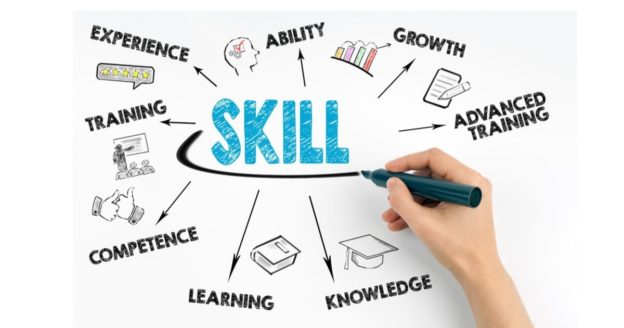
If we are currently preparing for jobs that don’t exist yet then provided that basic skills are in place,  the most valuable and marketable skill candidates can have and need, will surely be the pace at which they can learn and adapt.

What do you think?

Where are you in the change game? Me and my Kindle!

The dark place of resistance to change

I am frequently heard exhorting all sorts of people to adapt to change in job search. I run workshops in women’s groups, coach private clients and MBA classes in international Business Schools. I get profoundly frustrated when eyes glaze over in lack of understanding. If I get it… why can’t they?

In some areas I am pretty advanced. As an early adopter of social media, particularly in Europe, I made a relatively seamless transition to new technology as it related to career strategy. For some unfathomable  reason I could see the almost immediate connection between changing technology, economic circumstances and new approaches to developing a career. I just got it.

So why people clung onto these outdated less effective ways of managing their careers was truthfully incomprehensible to me.

Intransigent.
Yet in one area I confess, I too, remained intransigent. Books. I needed a cover and paper and something with weight I could put down on a coffee table, in my briefcase or on my nightstand.  I have spent fortunes on excess luggage shipping my reading material around with me and on postage having current titles delivered to any number of destinations. I’ve given myself back and arm ache, schlepping around weighty tomes and supplies of reading matter. I’m not even a corner turner, or spine bender. I wouldn’t dream of writing on one of my books. Even my best-loved reads are in such pristine condition that charity shops are willing to travel miles to pick up my rejects, whenever I make a donation.

I had a collection of probably about 4000 books (I’m a hoarder too!) You can imagine how much space that took up. For some time now my friends have been suggesting I acquire a Kindle, bemused that I am effectively paying storage to house books I would  probably never read again. My accountant, had he not been bald,  would have torn his hair out. I resisted for all the aforementioned reasons.

But the real reason was that because of something equally unfathomable, this was one area I didn’t want to… I simply couldn’t…. change.

Does the sun rise in the west? No! This was what I knew and was used to.

Kindle
I was given a Kindle for Christmas, complete with pink case. I went through all the usual social gestures of appreciation (“lovely darling, thank you.”) I  handled the rose-coloured item gingerly at arm’s length,  viewing it with deep suspicion, as my daughter enthusiastically  talked me through the user instructions. Cautiously, under supervision, I downloaded a few titles, grudgingly acknowledging the cost effectiveness and speed of the inter-connectivity with my Amazon account. I nodded reluctantly to the very clear advantages for someone like me who travels so much.

In early January, away from prying eyes,  I returned to this fine article,  picking it up with my finger tips and started to read. I had to admit it actually wasn’t so bad. I adjusted the font size.  I picked it up again and it was on the exact spot I left it. I sped through the books I had downloaded,  mixing up the forward and backwards buttons from time to time, but no real harm done.  When I finished one title on the train to Paris  I simply downloaded another.  And hey-ho there it was! No postage. It slips into my handbag at a fraction of the weight of whatever weighty tome might be on my reading list.

Resistance
So now when I talk to anyone who has doubts about creating a LinkedIn profile, opening a Twitter/ Google+ account, or using a Facebook page for professional purposes, I feel I have been in that dark place of resistance. We all have them and they are all different.

Will I ever buy a paper book again? I’m sure I will. Just as anyone will print out a hard copy CV.

Am I glad I finally got over myself, because this is what it is really about?  Absolutely.

Where are you in the change game? Where is your dark place of resistance?

P.S. I am not working for Kindle!

P.P.S. Article by Jonathan Franzens “ebooks are damaging society” for a counter view.

Portfolio Careers: impact on workplace & jobseeker

Portfolio careers a rich tapestry of work experience - on the increase

A Portfolio Careera tapestry of a variety of eclectic employment experiences; employment in a series of short-contract or part-time positions

Not new but on the increase
The term Portfolio Career is being used in current business  vernacular  with the same type of smug and superior ” in the know -ness” ,  as we might have seen when the atom was split or  the wheel invented.  I always smile indulgently! The concept of a portfolio career is actually far from new. What is new is the number who have embarked on this career path.

“Moonlighting” has long been a euphemism associated with  individuals aspiring to break into such professions as  acting, music , arts, writing etc,  or others running more than one job. As companies abandon the corporate  “ cradle to grave” employment concepts,  and move towards the leaner and meaner machines of more recent times,  we had already started to see the beginnings of this seismic shift some years ago. Business Week referenced the changing work place practise of   Perma Temps,   as organisations  began to seek flexible ( =  disposable) workforces, to allow rapid response to fast changing business conditions.

I view and review literally hundreds of CVs in any given week.  Although predicted by all the trend spotters, the shift to individuals having an increasing  number of jobs and spending less time in each , is becoming very marked. I am  often asked to avoid “ hoppers/movers/jumpers”, but that is now an outmoded concept,  particularly as younger age demographics move between jobs more strategically,  with periods of employment, also punctuated by stints in further education.

No alternatives
Portfolio  careers and the wearing of many hats was once  associated with mid- career or older professionals, perhaps after redundancy seeking a better work / life balance,  or  when there were no other options. It was considered a fall back position.  We are now seeing younger  Gen Yers  build up this type of career,  not because they particularly seek an improved quality of life,  but because they have to tap into different parts of their skill sets, simply to  get a job,  any job.   This is also apparent when coaching career changers pursuing MBA courses,  when I have come across a range of skills from Project Management, entrepreneurial roles , to  professional photography,  all in the same student.  The real  challenge is to create an interesting and credible career profile to showcase success stories, transferable skills and  the lessons learned from such diverse backgrounds and interests.

Choice
However, there are people who simply prefer the variety, flexibility and freedom offered by tapping into a wide range of skills, so they choose a wider portfolio career, over a more traditional focused one.  At one time a portfolio career was considered to be higher risk than a corporate role. Today,  I’m not sure that is the case.  Portfolio careers suit disciplined, self motivated people with strong time management skills,  who have a variety of skills and interests,  as well as the drive to go out and market and monetize them. Portfolio careers are also generally associated with adept networkers and can be a great route to gaining experience in a new field, whilst maintaining a part-time role in a traditional job in line with a professional background. Many do just that.

Challenges
The real issue will be for the demographic which doesn’t voluntarily choose this more entrepreneurial style of career strategy.  Flexibility for companies is key, of course, but if organisations aren’t careful,  they can wind up searching for new talent in an alienated and demotivated workforce, which has struggled to gain skills in a wide range of unstructured and less professional environments. It also means a  quantum shift from lazy and uninsightful  ”copy / paste” recruitment methodologies, sadly  relied upon by companies and some search consultants alike.

Career changers: 30 minute daily strategy

Can you afford not to?

For anyone embarking on a job search related to career change and developing what is now called a “personal brand” for the first time, I outline the steps and options involved using social networking. As I do so, I am always aware of two things. Faces turning ashen with panic and then groaning, as clients,  whether individually or in groups, mentally try to calculate how much time this process is going to take out of their already busy day. There is a reason it’s called net ”working” (not net “vacationing”).  It is indeed a lot of work, it does take time and much of it is doing stuff people have never heard of before  (and wouldn’t choose to do if they had!) .

Authenticity
Today,  job search is personal, flexible and strategic. Sadly there is no template or blue print which can be reproduced, although guidelines can be given.  What works for one individual, will not work or sound authentic for another. The whole point of it is also to be unique and stand out, not to be a clone of your neighbour.  The learning process is  intuitive,  as we move away from the old style rigid approach. This does indeed makes life far harder for any job seeker today and it is time-consuming. However,  authenticity is key,   which is why we have to run, stroll or even crawl,  the hard yards for ourselves.

Strategic alliances
As recessionary thinking starts to hit us again after a very brief interlude of optimism,  the job market looks set to shrink.  Economic downturns touch even the brightest and the best. It’s imperative that developing a  personal brand  and raising visibility becomes a daily part of all job seekers’ routines -  before there is a crisis.  Social networking is a great way to supplement and enhance actual networking,  although ( and I stress)  not a substitute for it.

Simple basics
—Select a primary platform  – for most people this should be a professional network   (e.g. LinkedIn, Viadeo, Xing)  to showcase career success stories and background. The largest English language one is LinkedIn for and anyone seeking a career in an international arena,  I would always advise a profile placed on this platform. — As a minimum I would suggest the following activity:

  • Send out 1 update daily to develop your reputation. If you have a blog so much the better,  otherwise any nugget of information that could be interesting taken from the press or other media related to your new function/sector. Twitter is a good source.
  • Post 1 comment in a LinkedIn group related to your target career.
  • Indentify and connect with 5- 10 new connections in your target sector – preferably ones you hope to meet in person.
  • Research companies in your target sector.

Connect with other platforms  – extend your reach via Twitter and Facebook which are becoming fast growing global job boards as the Like, Share and Tweet functions become a quick way to circulate job information. Employers are also strengthening their Employer brand on these platforms and offer increasing opportunities to inform and connect with job seekers. Trend spotters are suggesting that these 2 platforms will change the job search  landscape in 2012.   Although their figures are US-based, Europe is  usually only a few steps behind. Get ahead of the game. Even a British spy agency is seeking code-crackers via Twitter and Facebook.

  • Post content via Twitter.
  • Share content from others ( RT).
  • Comment on or “Like “ a blog or LinkedIn update.
  • Post an update or a note on Facebook.
  • Locate followers and friends that might be helpful to you.
  • Pay it forward  – share any new updates with your peers or other job seekers in your network.
  • Partially automate when you are busy. Bufferapp hits Twitter and Facebook. I would advise not to over do it  – engagement is key.
  • Filter out the white noise of LinkedIn updates using LinkedIn signal 

—One of the advantages of Social Networking is that it’s self scheduling  – so any of this can be fitted  around other activities and in a piece meal fashion. It’s a question of carving out 10 minutes of time, 3 times a day which may make a difference. Yes, initially it might take longer, but as skills are honed and knowledge acquired,  it can be whittled down to become  rapid fire productivity. Eventually you will think in terms of the time this is saving you.

 The real question is perhaps not if can you afford the time,  but can you afford the risk of not allocating those key minutes, in the current economic climate? If you don’t take time to plan now,  you may find you have  more leisure than you planned for  to live with the consequences.

I “link” therefore I exist! Modern connectivity

Drowning in the Google pool and sinking into oblivion

 Modern connectivity There was a time probably no more than 5 years ago, when I could do my job very effectively by going into my contact data base and simply picking up the phone. Those days are gone. In 2008, as world markets crashed taking many global businesses with them, millions lost their jobs and disappeared into the ether of unemployment. If, and when they resurfaced they were difficult to reach. The foundations of the way most of us did business crumbled beneath us, as we tried to find new ways to stay connected.

At the same time we saw a dramatic upturn in the use of social media, which heralded a new era for business generally and became especially valuable in the executive search and hiring process. Early adopters got a head start. Now it is less ” I think therefore I exist” but more ” I link therefore I exist”. We are in an age of super connectivity.

Google ranking
Many column inches have been written about online connections. The quality vs quantity discussion rages unabated and I’m not even going to get into that one. My simple point is that unless you are a high-ranking executive in publically registered company, or some sort of super star, with acres of media coverage to your name, and land a first page Google ranking (for positive reasons!), an online professional profile or other virtual presence, which benefits you professionally, is a must. For the average, mere job seeking mortal, the failure to have an online professional identity, while possibly not total career hari kari, will be tantamount to jumping into the Google pool with lead weights on your ankles. You will simply sink into oblivion.

What  to do?

  • Get going! Create an online professional presence:  this enables you to be found  not just by search specialists and hiring managers but anyone who wishes to locate you or your professional expertise. This will vary from one country to another. The strongest global English-speaking platform is LinkedIn. Other platforms such as Viadeo or Xing also carry traction in different geographic areas.  The 3 demographics most reluctant to do this in my experience are entry-level, women and Boomers. This one simple process shows you care and are switched on!
  • Complete the profile fully and strategically: using  strong key search words. Generally I find the people who get most frustrated (and whinge the loudest) with a tendency to blame other external factors,  are the ones who have the weakest profiles and fewest connections.
  • Connect and engage strategically: build up your professional network, establish relationships,  generate credibility in your industry or sector. Set up an online trail of links to you! You can’t tap into your network unless you have one. Reluctant categories in my experience are: entry-level and women
  • Manage your reputation: leverage social media to cement the professional you. Use key words in your other online profiles and even a link to your online CV or LinkedIn profile.   Entry level, women and Boomers are the equally reluctant to do this. Social media is no longer just social, but has a professional component too. That’s why it’s called Personal Branding. Change your privacy settings if this really bothers you.
  • Don’t neglect other personal  networks: there is tendency with social media pundits to drink their own Kool Aid and believe their own hype, that these platforms are the “one- stop- shop” solution. No matter what, you have to get out from behind the computer and network personally! An online professional presence is only one tool in a much bigger job search tool kit. Category most reluctant to do this – women and entry-level.

As we teeter yet again on the brink of a possible financial services meltdown, with Greece clinging to the edge of the Acropolis by its fingernails, those without professional online “links” will almost certainly be caught at a disadvantage. There is even in my anecdotal experience, an emerging pattern of which demographics are constantly at risk.

Regrettably we have to do more than “think” to exist today. We have to “link“.

Why career blips are good

We are all the sum of many parts

Career pundits encourage us, exhort us even, to aim for professional activties in which we excel  or feel passionate about. But for some of us that  simply isn’t possible.

Sometimes,  it’s just a case of  not having the skills to identify what  we are good at or feel passionate  about. In other cases our passions, skills and interests change  and develop over time and are not fixed. Sometimes,  we just need to do something, anything,  to put  a roof over our heads and 3 squares on the table.

Multi- faceted
In High School I was “good” at English, History and Geography, but for different reasons went on to study Economics, which in terms of academic results,  was my weaker subject,  not considered to be my smartest move by my teachers. I was passionate about tennis, but this enthusiasm was best employed as a spectator, rather than on the court. I grew up believing I was bad at maths, yet found myself recently in an MBA workshop, as the only person there who could explain the root of Pythagoras’ Theorem. 

There are times when we don’t want to focus on the areas in which we excel and want to explore new territory.  We come to terms with the fact that our passions are best kept as non-revenue generating past times.

Skills, both hard and soft, which we put on the back burner at early stages in our careers, we resurrect, or even discover for the first time in later years. Other latent talents develop over time and others become redundant. I once considered myself to be pretty hot-headed,  I am now frequently an oasis of calm, when others are getting bent out of shape.

Nothing is set in stone
The reality is that we all have many choices and nothing is set in stone. The real skill is being able to navigate these changes with flexibility and resilience and adapt in true Darwinian style to different circumstances.  Unfortunately, we have all been culturally conditioned to expect a vertical career progression (maybe even vertical lives), in constant upward motion and mobility. But those days are perhaps over.

Individuals who desperately want to pursue one career or life track,  but for whatever reason, simply have no activity in which they excel, or feel passionate about, end up apologising for what is today culturally perceived to be an unfortunate blip.  But today, in a tougher job market these blips are going to be the new norm. We can’t all get what we want as the song goes.

But that shouldn’t imply failure.

  • It’s not the end of the world if we don’t get into the college of your choice or even into college at all.
  • We have all been in jobs that have not been ideal, but out of economic necessity have been forced to stick at them.  We can look around for others or seek another focus for our energy.
  • Life doesn’t end with a missed promotion or lost job. There are other places to work. Other things to do.

Hiring by numbers

It is perhaps part of today’s culture to view this sort of flexibility and adaptability as wishy-washy, uncommitted or uninspiring. I see it simply as a new pragmatism, an ability to adapt to uncertain economic times. This approach  deserves the same respect from hiring practitioners,  as committment to a lifelong career in a given profession, sector or even company.

This new need to ” do what we can “  makes life challenging for recruiting and hiring managers,  who will have tougher jobs identifying these intangible skills, as their hiring goal posts constantly change.  There will be fewer candidates exhibiting the hallmarks of the traditional, predictable, career trajectory. They will need to move out of recruiting by numbers and probe more deeply. Many, sadly, are not equipped to do this effectively and may need new training themselves.

We are all the sum of many parts and instead of having to explain that with an apology, we should not just be acknowledging that fact, but celebrating it.

Walking the corporate tightrope without a golden parachute

7 ways to create a workplace safety net 
There have never many guarantees in life as a corporate employee. But now, despite employment protection legislation, there seem to be even fewer. We live in turbulent and changing times and no one is immune.  So it’s not just necessary to be strategic about career advancement, but to always have a safety net in place in case of an unexpected fall. Even minor changes which at one time might have produced a little stumble, might send you crashing to your knees. These could be anything from a promotion disappointment, a take over, a new boss coming in,  or even an economic blip that might  unexpectedly impact results and performance.  No one is indispensable. And sometimes our faces, from one day to another, simply don’t fit. It’s not only high-profile CEOs who get fired over the phone.

Fired
In the last few weeks I have had  two clients, who have been basically, summarily dismissed. For some reason, out of the blue, their contributions were deemed to be below par. Within an hour they have been placed on notice, told to clear their desks and  instructed not to return to their place of employment. Access to their company email accounts and records has been immediately blocked.  Had they committed some grave offence or were guilty of gross misconduct: hit the boss, lot a few  billion,  or sworn in front of a client? No they hadn’t. There seemed to be no obvious reason to either of them, nor was there any traceable record of any ”sackable” offence, or even communicated under-performance. They both had contracts of employment. For some reason they were both surplus to requirements at one given moment in time and were  “let go”, to use that hateful euphemism. Neither were senior enough to negotiate a golden parachute.  

Regretfully, they have both found themselves in a void: hurt, angry, confused and wondering what their next steps could be.  

Commonalities
The take away lessons to both these clients were signficant and there were some commonalities. They realised with that great gift of 20/20 hindsight that when the going was good, they had taken it for granted and had not taken even basic precautions.  Under- performance had been cited in both cases as reason for termination  and in reviewing their next steps,  the only way both individuals could support their own version of events was verbally  and anecdotally.  If considering legal action, this can be problematic.  With future employers it might also be useful to have support documentation to hand. 

 7 Precautions

  • Always store personal professional information outside the office. Both used their office computers for personal use and had not stored key information privately, or as hard copy.  They had no access to vital correspondence on other hard drives,  once access had been denied. 
  •  Always ask for annual goals and targets against which your performance will be assessed in writing. Keep a record of that document or correspondence.  Neither had done this.
  •  Save copies ( in either a personal email account or as hard copy)  of the good stuff! Any positive  feedback or success stories. Once outside the swinging doors, neither had any record of their achievements or access to them, even previous performance assessment documentation where they had received strong ratings.
  • Keep copies of requests for support and document any tricky problems as well , especially the methods you used to overcome them. Neither had  hard or soft copies of ignored  requests for support and advice,  or  any conflicting instructions  they had received. 
  •  Ask for recommendations from peers and superiors within your company  to support your success stories.   These can be posted on an online professional profile for the whole world to see. 
  • Look for a mentor or sponsor within the organisation you can turn to for advice. Both felt isolated.
  • Carry on building an external network.  You never know when you will be unexpectedly on the job market.

This may all seem very cynical, but change doesn’t have to be cataclysmic to produce a massive personal downside in today’s cyclic job market.  Organisations will be equally vigilant in maintaining their records.  Unless you have negotiated a golden parachute  as part of your contract of employment, having a net under the corporate tight rope is simply a basic and very necessary safety measure.  

 You’ve heard of driving defensively -  well  regrettably, although far from ideal,  we now we have to work defensively too.

What other precautions would you suggest?   

A great divide: planned parenthood and corporate planning

Corporate plans in place for a terrorist attack or natural disaster, but not maternity leave

Stereotypical thinking
I have just taken a flight across Europe. For 2 hours and 20 minutes straight, a new-born baby screamed without taking a breath the entire trip. The parent (male) and steward (male) did their level best to soothe the poor mite – but to no avail. It was a totally natural scene and possibly apart from being thankful it wasn’t their child, no one on that aeroplane gave the matter a second thought and especially not the gender of the 2 care givers

Perpetuating stereotypes
Which made me think of the Forbes Power Women List which came out last week. I’m not a fan and generally believe it leans towards bull rather than buzz, although I will admit this year’s list is an improvement on 2010, despite Christine Lagarde only coming in at #9. I also think perhaps somewhat contentiously that it promotes stereotypical thinking, just as much and perhaps more so, as it tries to debunk it.

A vital statistic that stood out for me in this year’s promotional roll call, in that slightly breathless, condescending, incredulous, ” didn’t they do well” tone, is that 88% of the women on the list have children. They are mothers. What’s particularly interesting about this information, is that it is even mentioned. I assume most of the Forbes powerful men list are fathers. Does anyone ever comment about that? Exactly!

Planned parenthood
One of the greatest historical changes to impact the lives of couples and women in particular in recent times (perhaps ever) in the developed world, is the wide availability of sophisticated birth control and contraception.The Economist (December 31, 1999) called oral contraceptives ” the greatest science and technology advance in the twentieth century

This has given both women and men (let’s not forget these are not immaculate conceptions) in developed economies, the opportunity to plan with the military precision of a space mission, not just the number of children they have, but also the timing of each pregnancy. Diets are adjusted, alcohol intake modified, exercise increased, temperatures taken, ovulation cycles monitored, sperm counts checked, baby rooms prepared, ante natal classes attended, showers held, mother and baby classes subscribed to. Books are bought, family are alerted, dad-to-be helps with all the heavy breathing, romper suits arrive by the dozen. Buggies, bouncers and baby chairs are ordered. Names are chosen, christenings or similar naming ceremonies are planned. Plan Bs hover in the background , with frozen eggs and sperm on hand just in case mother nature doesn’t oblige.

Strategic planning
So it would seem, notwithstanding the odd surprise, that having a baby has to be one of the most orderly and thought out processes that many men and women undertake in their lives. So I ask myself (and you too!) why does the planning seem to stop there? If employees are planning their families, why can organisations not plan to the same degree? Instead the careers of women in their 30s becomes a major elephant in the sitting room, that people hope will amble away on its own. And women do – in their droves.

Female workforce
Janine is a Client Services Director for a well-known financial services company based near Brighton, UK. She manages a team of 120, of which 90 are women. 80% of that number are between the ages 18 and 40. “ If all my team became pregnant at the same time, I’d have a problem!” she told me smiling. “As their manager I’m not allowed to ask my employees what their plans or intentions are with regard to having a family. Their supervisors are close to their staff in an informal way and have ideas about who we would move where and to cover which gaps and skill sets. But there is no official succession planning policy to cover maternity leave, although we do have an emergency plan in the event of a terrorist attack or other natural disaster! “

Terrorist threat
Now I’m sure there could well be any number of subversive, underground, terrorist cells plotting to target financial organisations near Brighton, but I wonder how these threats, including a meteorological catastrophe, would stack up against the likelihood of any of those female staff becoming pregnant. There is a plan to cope with both of the former, but not the latter. Does that strike anyone as a little incongruous? I also find it frustrating than women are not expected to plan beyond the start of their maternity leave and although having a baby is discombobulating on many levels, it doesn’t close down brain functionality completely. They are having a baby, not a lobotomy.

The father factor
A Fatherhood Study carried out by Boston College tells us “ According to a study by the National Study of the Changing Workforce, for the first time since 1992, young women and young men do not differ in terms of their desire for jobs with greater responsibility (Galinsky, Aumann, & Bond, 2008). As a result, young women may be less prone to be the “accommodating spouse” in two-career couples, placing their career aspirations second to that of their male spouses”.

In fact the study also suggests that men also have different expectations. “Their wives are likely to be at least as well if not better educated, just as ambitious as they are, and make more money than they do. More importantly, these men feel that being a father is not about being a hands-off economic provider

Cultural changes
It would seem that although the expectations of both men and women are changing, organisations are not adapting fast enough to the cultural shifts in the societies around them. Economies need to counteract a declining birth rate and stimulate economic growth. The economy of the euro zone for example has been predicted to grow 16 per cent if women were in formal employment as much as men. Both men and women are looking for better work/life balance, not just women, and the business model for corporate culture, which creates a gender divide needs to be re-examined rather than emulated.

Lists such as the Forbes list with messages which portray women with successful careers as mothers are actually perpetuating stereotypical thinking rather than knocking it on the head.

Men get married and are fathers too.